Do You Have to Wait for a Pedestrian to Completely Cross the Street in California?
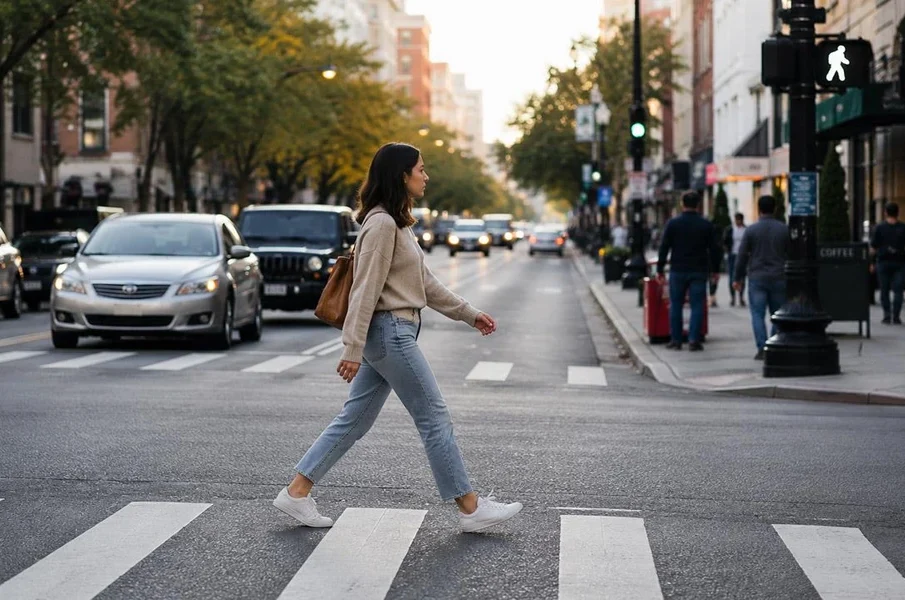
Understanding California Crosswalk Laws and Driver Responsibilities Around Pedestrians.
Pedestrian safety remains a major concern throughout California, particularly in heavily populated areas such as Orange County and the Inland Empire where both vehicle and foot traffic continue to increase. Drivers frequently encounter pedestrians at marked crosswalks, intersections, school zones, parking lots, and residential neighborhoods. Yet despite the importance of these interactions, many motorists remain uncertain about exactly what California law requires when pedestrians are crossing the street.
One common question drivers ask is whether they must wait for a pedestrian to completely cross the street before proceeding through an intersection or crosswalk. The answer is not always as simple as a “yes” or “no.” California law prioritizes pedestrian safety and imposes specific duties on motorists to exercise caution and yield appropriately. Understanding these legal requirements can help drivers avoid collisions and clarify how liability is determined after pedestrian accidents.
For pedestrians injured by negligent drivers, understanding these rules may also play an important role when pursuing compensation after an accident.
At Oracle Injury Attorneys, the legal team helps injured pedestrians and accident victims throughout Orange County and the Inland Empire understand their rights and pursue compensation following serious accidents. Through dedicated advocacy and personalized legal guidance, the firm works to protect individuals affected by preventable collisions.
“California law emphasizes pedestrian safety by requiring drivers to exercise reasonable care whenever individuals are crossing or preparing to cross the roadway.”
California Law Requires Drivers to Yield to Pedestrians
California law generally requires motorists to yield the right-of-way to pedestrians crossing within marked crosswalks and at many unmarked crosswalks located at intersections.
Under California Vehicle Code Section 21950, drivers must exercise due care for pedestrian safety.
This includes responsibilities such as:
- Reducing speed when necessary
- Stopping when required
- Remaining alert for pedestrians entering the roadway
- Avoiding actions that place pedestrians at risk
The law applies to:
Marked Crosswalks
Crosswalks identified with painted lines or other designated markings.
Unmarked Crosswalks
Many intersections include implied crosswalk areas even when no painted markings are present.
Importantly, pedestrians also have responsibilities under California law and may not suddenly leave a curb or place themselves in immediate danger.
However, motorists generally bear substantial obligations to prevent pedestrian collisions whenever reasonably possible.
Must Drivers Wait Until Pedestrians Fully Cross?
California statutes do not specifically state that drivers must always wait until pedestrians have completely reached the opposite sidewalk before proceeding.
Instead, the key legal standard involves exercising reasonable care and ensuring that proceeding does not endanger the pedestrian.
In practice, many law enforcement agencies and safety organizations recommend that drivers wait until pedestrians have safely moved beyond the driver’s lane of travel and no longer face immediate risk.
Several factors influence whether proceeding is appropriate:
Width of the Roadway
On multi-lane roads, pedestrians may still be crossing portions of the roadway even after clearing one driver’s immediate lane.
Distance Between the Vehicle and Pedestrian
Drivers should avoid creating situations where pedestrians feel threatened or pressured.
Visibility Conditions
Poor lighting or weather conditions may require additional caution.
Presence of Children or Vulnerable Individuals
Extra vigilance is especially important near schools and areas frequented by older adults.
Although drivers may sometimes legally proceed before pedestrians have completely exited the roadway, doing so prematurely may increase the likelihood of accidents and potential liability.
“The safest approach is often to wait until pedestrians have clearly reached safety before continuing through the intersection.”
What Is Considered a Crosswalk in California?
Many drivers mistakenly believe that pedestrian protections apply only to painted crosswalks.
California law recognizes two primary categories:
Marked Crosswalks
These include:
- Painted roadway lines
- High-visibility crossing patterns
- School crosswalk markings
Unmarked Crosswalks
An unmarked crosswalk generally exists at intersections where sidewalks would naturally extend across the roadway.
This means pedestrians may still possess right-of-way protections even when no visible markings are present.
Drivers approaching intersections should remain attentive regardless of whether crosswalk lines are clearly designated.
Failing to recognize unmarked crosswalks can contribute to preventable collisions and potential legal consequences.
Special Considerations in School Zones and Residential Areas
Drivers should exercise heightened caution in locations where pedestrian activity is particularly common.
Examples include:
School Zones
Children may behave unpredictably and have difficulty judging vehicle speeds and distances.
Motorists should:
- Observe reduced speed limits
- Follow crossing guard instructions
- Remain alert near school entrances and exits
Residential Neighborhoods
Pedestrians, cyclists, and children playing nearby increase the need for caution.
Parking Lots
Although not traditional roadways, parking lots frequently involve interactions between vehicles and pedestrians.
Failure to exercise reasonable care in these environments may contribute to liability following accidents.
Defensive driving practices become especially important in areas with increased pedestrian presence.
How Pedestrian Accidents Affect Liability Claims
Pedestrian accidents often result in severe injuries due to the lack of physical protection available to individuals on foot.
Common injuries may include:
- Traumatic brain injuries
- Broken bones
- Spinal cord injuries
- Internal injuries
- Soft tissue damage
- Psychological trauma
When collisions occur, determining liability frequently requires evaluating whether the following are true:
The Driver Yielded Appropriately
Failure to yield may constitute evidence of negligence.
The Pedestrian Followed Applicable Rules
Pedestrian conduct may also be considered.
Comparative Negligence Applies
California follows a pure comparative negligence system.
Under this framework, injured pedestrians may still recover compensation even if they share partial responsibility for the accident.
However, recoverable damages may be reduced according to the percentage of fault assigned.
Insurance companies often attempt to shift blame onto injured pedestrians, making thorough investigation particularly important.
Safety Tips for Drivers Around Pedestrians
Reducing pedestrian accidents requires awareness and proactive decision-making.
Drivers can improve safety by:
Slowing Near Crosswalks
Reduced speeds provide additional reaction time.
Scanning Intersections Carefully
Remain alert for individuals entering the roadway.
Avoiding Distracted Driving
Mobile devices and other distractions significantly increase collision risks.
Yielding Generously
When uncertainty exists, prioritizing pedestrian safety is often the best course of action.
Exercising Extra Caution at Night
Visibility challenges may make pedestrians harder to detect.
Defensive driving not only protects lives but may also reduce legal exposure following accidents.
What Should Injured Pedestrians Do After an Accident?
Pedestrians injured in motor vehicle accidents should consider taking several important steps.
Seek Immediate Medical Attention
Prompt treatment protects both health and documentation of injuries.
Contact Law Enforcement
Police reports often provide valuable evidence.
Gather Information
- Driver contact information
- Insurance details
- Witness information
- Photographs of the scene
Preserve Medical Records
Documentation helps establish damages and treatment needs.
Consult a Personal Injury Attorney
Legal guidance can help protect rights during insurance negotiations.
Because pedestrian accidents often involve serious injuries and complex liability questions, experienced legal representation may prove beneficial.
Frequently Asked Questions
Do drivers have to wait until pedestrians completely cross the street in California?
California law requires drivers to exercise reasonable care and yield appropriately. While the law does not specifically require waiting until pedestrians fully reach the opposite sidewalk in every situation, drivers should ensure pedestrians are no longer at risk before proceeding.
Do pedestrians always have the right-of-way?
Pedestrians generally have right-of-way protections within marked and many unmarked crosswalks, although they also have responsibilities to avoid creating immediate hazards.
What is an unmarked crosswalk?
An unmarked crosswalk exists at many intersections where sidewalks naturally continue across the roadway, even without painted markings.
Can injured pedestrians recover compensation if partially at fault?
Yes. California’s comparative negligence system allows recovery even when pedestrians share some responsibility, although damages may be reduced proportionally.
What should I do after a pedestrian accident?
Seek medical attention, report the incident, gather evidence, and consult an attorney promptly.
Protect Your Rights With Oracle Injury Attorneys
Pedestrian accidents can lead to devastating physical, emotional, and financial consequences. Understanding California pedestrian laws helps both drivers and pedestrians navigate their responsibilities while promoting safer roadways for everyone.
At Oracle Injury Attorneys, experienced personal injury attorneys advocate for injured pedestrians throughout Orange County and the Inland Empire. Through thorough investigations and compassionate legal support, the firm works to help accident victims pursue the compensation they deserve following preventable collisions.
If you or a loved one has been injured in a pedestrian accident, contact Oracle Injury Attorneys today to discuss your legal options and learn how the firm can help protect your rights.



-
The Hidden Costs of a Personal Injury Beyond Medical Bills
A personal injury can affect nearly every aspect of a person’s life. ... -
-
-
-